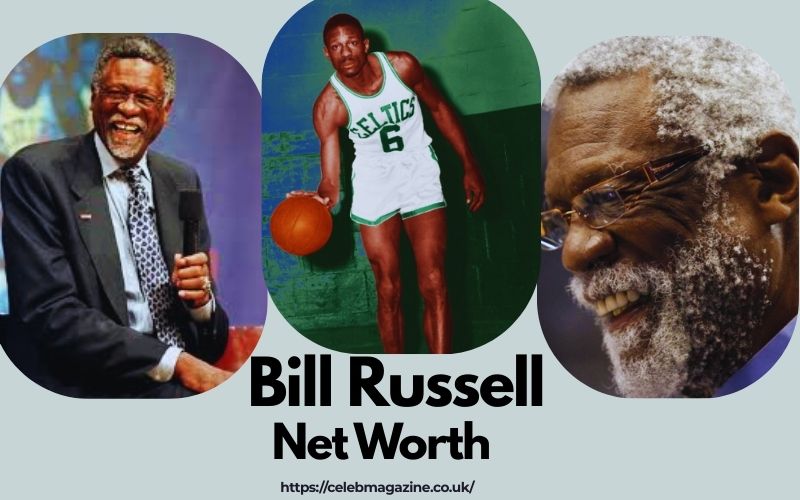
Bill Russell Net Worth: The Legend’s Career & Total Wealth
When we discuss the financial landscape of the NBA today, we often talk about “supermax” contracts exceeding $300 million and bench players earning more in a single season than legends made in their entire careers. At the center of this conversation is often the late, great Bill Russell.
At the time of his passing in July 2022, Bill Russell net worth was estimated at $10 million. While that figure is a fortune by any standard, it is a fascinating case study in how the business of sports has evolved. Russell wasn’t just a basketball player; he was a pioneer who fought for every dollar, setting the stage for the billion-dollar industry the NBA is today.
The $100,001 Strategy: Negotiating Like a Champion
Bill Russell net worth approach to his salary was as tactical as his defense on the court. During the 1960s, the NBA was still finding its footing. The rivalry between Russell and Wilt Chamberlain wasn’t just about rings—it was about respect and value.
When Wilt Chamberlain signed a contract for a record-breaking $100,000, Russell famously went to the Boston Celtics’ front office and demanded a salary of $100,001. He didn’t want the money for the sake of luxury; he wanted it to signify that he was the premier player in the league. That single dollar difference became a legendary piece of NBA lore, proving that Russell understood his leverage long before “player empowerment” was a buzzword.
Breaking the Coaching Barrier: A Dual-Income Pioneer
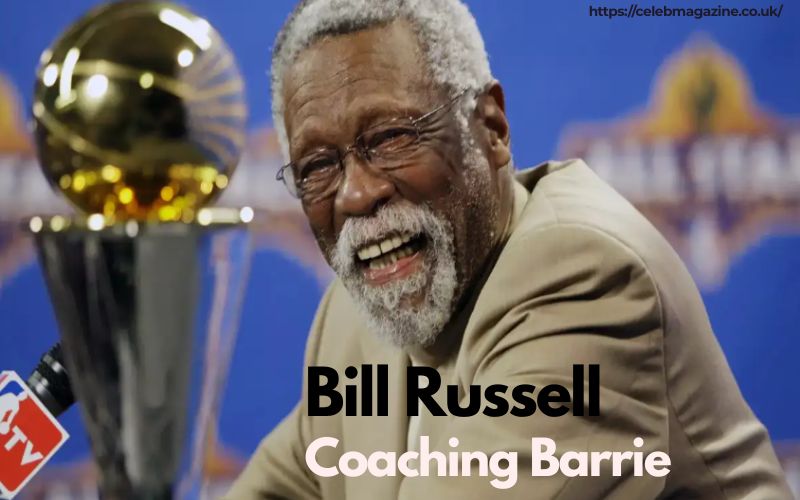
In 1966, Bill Russell made history by becoming the first Black head coach in the NBA while still playing for the Celtics. This “player-coach” role was a masterstroke of both leadership and financial planning.
The Dual-Responsibility Model: Managing and Guarding
Russell’s day-to-day life during this era was a grueling double-shift that justified his premium pay scale. He was responsible for two distinct, high-pressure roles:
- The Locker Room Architect: As a coach, he had to manage personalities, design plays, and make split-second substitutions. He held the authority to critique teammates with whom he shared the floor, a delicate balancing act that required immense psychological intelligence.
- The Defensive Anchor: While coaching, he remained the most dominant defensive force in the league. He didn’t just tell players where to be; he was there beside them, swatting shots and grabbing 20+ rebounds a game.
Maximizing Market Value: The “Premium” Paycheck
By taking on the coaching mantle, Russell essentially combined two high-level executive salaries into one. In an era where NBA teams were lean operations, Russell’s ability to “do it all” made him the most cost-effective yet highest-paid asset in the league.
- Commanding the Top Tier: This role solidified his position as the league’s highest-paid player. It gave him the leverage to demand contracts that reflected his unique status as an “indispensable” employee.
- Negotiation Leverage: It is much harder for an owner to play hardball during contract negotiations when the person across the table is both your leading scorer’s protector and the man drawing up the winning plays.
The Blueprint for Future Earnings: Post-Celtics Coaching
Russell’s success as a player-coach—winning two NBA Championships in 1968 and 1969 while wearing the jersey—served as a powerful “proof of concept” for his post-playing career. It ensured that his earning potential wouldn’t dry up once his knees gave out.
- The Seattle SuperSonics Era: In the mid-70s, Russell signed a lucrative deal to become the coach and General Manager of the SuperSonics. This was a significant jump in his net worth, as he moved into the executive suite where the “real money” in sports began to grow.
- The Sacramento Kings Tenure: Even years later, his reputation as a tactical genius made him a high-value hire for the Kings in the late 80s.
- Setting the Standard: Russell proved that a Black athlete’s “Basketball IQ” was a marketable, high-value asset. This paved the way for future legends of NBA like Lenny Wilkens, Pat Riley, and Phil Jackson to command multi-million dollar coaching salaries.
The $7.4 Million Auction: The Value of History
One of the most significant contributors to the public’s understanding of Russell’s wealth came in late 2021. Russell partnered with Hunt Auctions to sell a massive collection of his personal memorabilia. The results were staggering:
- Total Sales: The auction netted over $7.4 million.
- The Final Jersey: The jersey Russell wore in his final NBA game in 1969 sold for an incredible $1.1 million.
- Championship Rings: His first (1957) and last (1969) championship rings sold for $705,000 and $558,125, respectively.
What makes this financial event truly “Russell-esque” is that a significant portion of the proceeds went to MENTOR, a non-profit he co-founded to help young people. Bill Russell net worth wasn’t just a bank balance; it was a tool for social change.
Real Estate and the Mercer Island Estate
For decades, Bill Russell called Mercer Island, Washington, home. His residence there was more than just a house; it was a sanctuary. In 2021, the 4,250-square-foot home—complete with a trophy room and custom-built features—was listed for $2.6 million.
Real estate appreciation in the Pacific Northwest played a quiet but vital role in maintaining his net worth. By investing in a high-value area and holding the asset for decades, Russell secured a multi-million-dollar pillar for his financial portfolio.
Why Isn’t His Net Worth Higher?
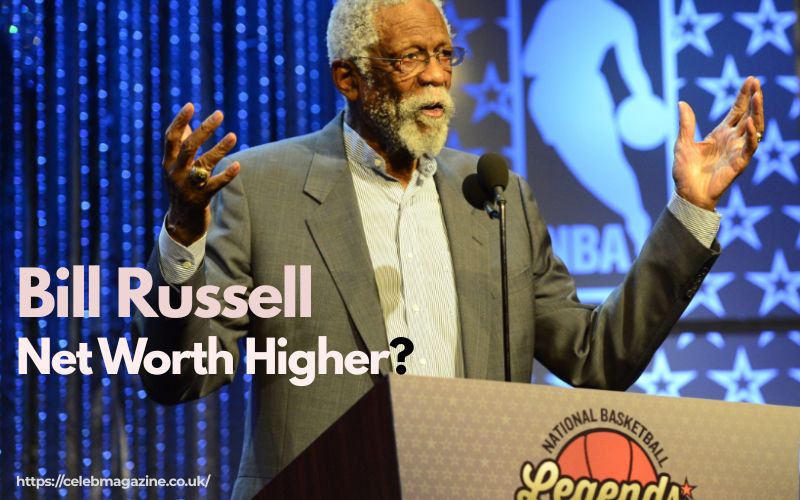
In today’s NBA, a mid-level bench player earns more in one season than Bill Russell did in his entire 13-year career. This disparity isn’t a reflection of talent, but a reflection of a vastly different business model.
The Revenue Gap: A League Without “The Deal”
The NBA of the 1960s was not the global juggernaut it is today. To put it simply, the league was “cash poor.”
- TV Revenue: Today’s NBA is powered by a $76 billion broadcast deal with Amazon, NBC, and ESPN. In Russell’s era, games were often shown on tape delay, and national TV contracts were worth a few hundred thousand dollars, not billions.
- Ticket Sales: For much of the 1960s, average attendance hovered around 5,000 to 6,000 fans per game. Compare that to the 18,000+ sold-out arenas of the 2020s. The “pie” was simply smaller, meaning the slices for the players—even the greatest ever—were significantly thinner.
Sponsorship Limitations: Pre-Sneaker Culture
We live in an era where LeBron James and Kevin Durant have lifetime contracts with Nike. In 1960, “sneaker culture” didn’t exist.
- Converse and Canvas: Most players wore standard Converse Chuck Taylors. While some stars had small endorsements, they were often for local businesses or hardware stores, not global apparel brands.
- The “Marketability” Ceiling: High-paying national commercials were generally reserved for Hollywood actors or white athletes in “gentlemanly” sports like golf or tennis. For a Black man in a team sport, the endorsement opportunities were almost non-existent compared to the multi-million dollar “logo deals” of today.
Integrity over Income: The “Activism Tax”
Bill Russell was a man of fierce principle during one of the most volatile periods in American history. His financial bottom line often took a backseat to his moral compass.
- The Front Lines: Russell walked with Dr. Martin Luther King Jr. and stood alongside Muhammad Ali during the “Cleveland Summit.” In the 1960s, these actions were considered “radical” and “controversial” by the corporate establishment.
- Corporate Backlash: While a modern player’s activism is often supported by brands like Nike or Pepsi, Russell’s activism made him “unmarketable” to many major corporations of his time. He chose to be a leader for civil rights over being a spokesperson for soft drinks, likely costing him millions in potential career earnings.
The Absence of Free Agency
Russell played in the era of the “Reserve Clause.” Once you were drafted by a team, that team owned your rights indefinitely.
- No Bidding Wars: There was no “testing the market.” If Russell wanted a raise, he had to convince Red Auerbach and the Celtics to give it to him. He couldn’t threaten to sign with the Lakers for a 50% pay increase.
- The Wilt Benchmarking: As mentioned, his greatest leverage was simply asking to be paid $1 more than Wilt Chamberlain. While iconic, this was a reactive negotiation strategy dictated by a system that suppressed player movement and salaries.
The Inflation Factor: $100,000 Then vs. Now
To be fair to the numbers, we must look at the purchasing power of the 1960s.
- $100,000 in 1965 is equivalent to roughly $970,000 today.
- $19,500 (his rookie salary) is roughly $220,000 today.
While these adjusted numbers show that Russell was wealthy by the standards of his time, they still pale in comparison to the $1.1 million rookie minimum in the current NBA. Bill Russell wasn’t just a player; he was the foundation. He played for the love of the game and the advancement of his people, ensuring that the players who came after him would never have to worry about the “gap” again.
The Philanthropic Legacy: Giving Back to the Game
Bill Russell financial story is incomplete without mentioning his generosity. He wasn’t a hoarder of wealth; he was a distributor of opportunity. His involvement with MENTOR and various civil rights organizations meant that much of his “potential” net worth was reinvested back into the community.
To Russell, wealth was measured in the impact he had on the world and the progress of the Black athlete. As he once said, “The most important measure of how good a game I played was how much better I made my teammates play.” He applied that same logic to his finances and his life.
Conclusion
Bill Russell net worth $10 million represents a life of discipline, strategic negotiation, and a deep understanding of one’s own value. He began his career in a segregated America earning $19,500 and ended it as a global icon whose very jersey is worth a million dollars.
While the numbers on the page are impressive, Russell’s true “total wealth” is found in the 11 championships, the Presidential Medal of Freedom, and the path he cleared for every player who followed him. He didn’t just win games; he won at life.